

Java笔记
包装类
Wrapper(包装器)
定义
针对八种基本的数据类型类型响应的引用类型
有类的特点,可以调用类的方法
除了 int -> Integer char- > Character 其余的六个都是将首字母大写就是对应的包装类
Boolean Byte Short Long Float Double
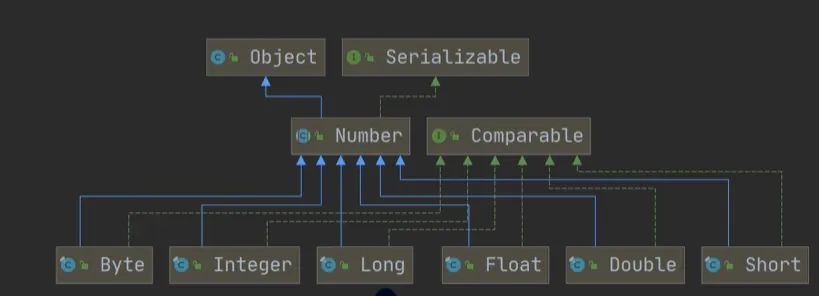
Boolean 与 Character 二者是实现了比较和可序列化的接口的Object子类
public final class Boolean implements java.io.Serializable,
                                      Comparable<Boolean>
class Character implements java.io.Serializable, Comparable<Character>而这些数字的类型一般都是继承了Number类,而Number类是实现了可序列化的接口的Object子类,数字类型直接实现比较接口
图标如下
装箱与拆箱
自动拆装箱,本质上和手动没有区别,由编译器自动调用方法
public class WrapperType {
    public static void main(String[] args) {
        //jdk5以前是用手动装箱,拆箱
        int i = 10;
        Integer pack = new Integer(i);
        Integer pack2 = Integer.valueOf(i);

        int j = pack.intValue();//手动拆箱

        //jdk5以后支持自动拆装箱
        int k = 200;
        Integer pack3 = k;//自动装箱
        int k1 = pack3;//自动拆箱
        //本质上和手动没有区别,由编译器自动调用方法
    }
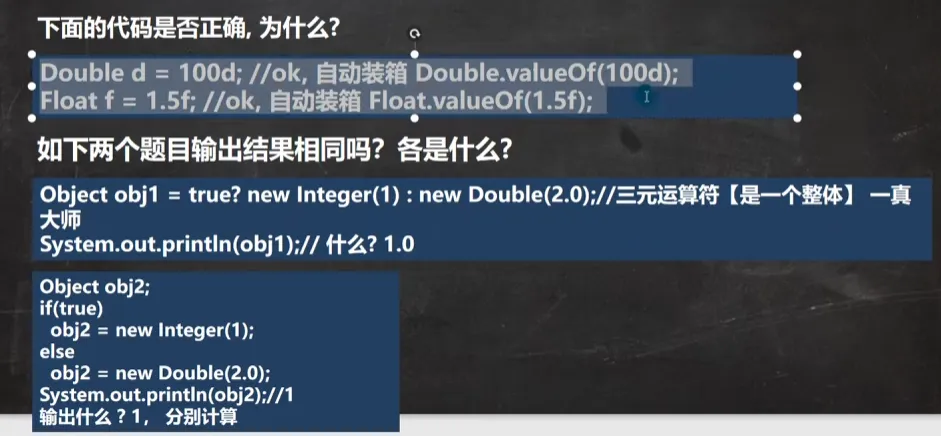
一道比较经典的面试题目
包装类型和String转换
public class WrapperType {
    public static void main(String[] args) {
        Integer i = 127;
        String s1 = i + "";//包装类转字符串
        String s2 = i.toString();
        /* 包装类的toString方法
        public String toString() {
                return toString(value);
            }
         */
        System.out.println(s1);

        Integer i1 = Integer.parseInt(s1);//字符串转包装类
        Integer i2 = Integer.valueOf(s1);//会调用parseInt

        System.out.println(i2);
    }
}
一些常用的方法
即查即用,不用特殊记忆
返回最小值 最大值
public class WrapperType {
    public static void main(String[] args) {
        Integer i = 127;
        System.out.println(i.MIN_VALUE);
        System.out.println(Integer.MIN_VALUE);
    }
}
判断是不是数字,是不是字母,是不是大写,是不是小写,是不是空格,转成大写,转成小写(查询使用即可,或者可以自己实现)
Integer的面试题
之前也涉及到过,在前面的数据类型中我曾写过
public class WrapperType {
    public static void main(String[] args) {
        Integer i1 = new Integer(12);
        Integer i2 = new Integer(12);
        System.out.println(i1 == i2);//false
	//创建新的对象,指向的地址肯定不同
        Integer i3 = 12;//Integer.valueOf(12);
        Integer i4 = 12;//Integer.valueOf(12);
        System.out.println(i3 == i4);//true
	//Integer自动包装调用valueOf(),其中涉及到常量池的概念
        Integer i5 = 128;
        Integer i6 = 128;
        System.out.println(i5 == i6);//false
    }
}
public static Integer valueOf(int i) {
if (i >= IntegerCache.low && i <= IntegerCache.high)
return IntegerCache.cache[i + (-IntegerCache.low)];
return new Integer(i);
}存在一个cache,-128—127,在范围外才会创建对象
已经静态的创建好了一个Integer包装数组,将-128—127,在范围内直接用引用指向即可
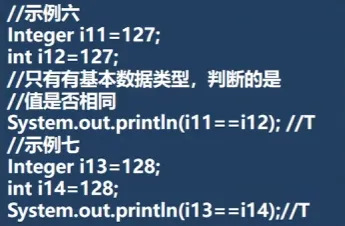
还有一个,这里涉及到的是基本数据类型,比较的是值是否相等
String
定义
支持可序列化接口,比较接口,可读的字符序列接口
public final class String
    implements java.io.Serializable, Comparable<String>, CharSequence { ... }
1.String 对象是用来保存字符串的,是一组字符序列
2.字符串常量对象使用双引号括起的字符序列
3.字符串的字符使用的是Unicode字符编码,一个字符占用两个字节
4.String类较为常用的构造方法有以下:多种构造器
()

(String original)

(char[] a)

(char[] a, int startIndex, int count)

(byte[] b)
String 有属性private final char value[ ] :用于存储字符串内容,final代表value指向的地址不可以被修改(而地址存储的单个字符内容可以变化),以下是一个代码示例
public class String1 {
    public static void main(String[] args) {
        final char[] target = {'1','2','5'};
        target[0] = '4';
        char[] target1 = {'1','2','3'};
        //target = target1;
    }
}
创建String对象方式
public class String1 {
    public static void main(String[] args) {
        String str1 = "abc";//方式一
        String str2 = new String("abc");//方式二
    }
}
方式一:查看常量池中是否有”abc”的数据空间,如果有直接指向,如果没有则在常量池中创建,最后指向的是常量池中的空间地址
方式二:在堆中创建空间,如果里面维护了value属性,指向常量池中的”abc”空间,如果常量池中没有”abc”重新创建,如果有直接通过value指向,最终指向的是堆中的空间地址,堆中的引用指向常量池中的地址
以下是示例图片
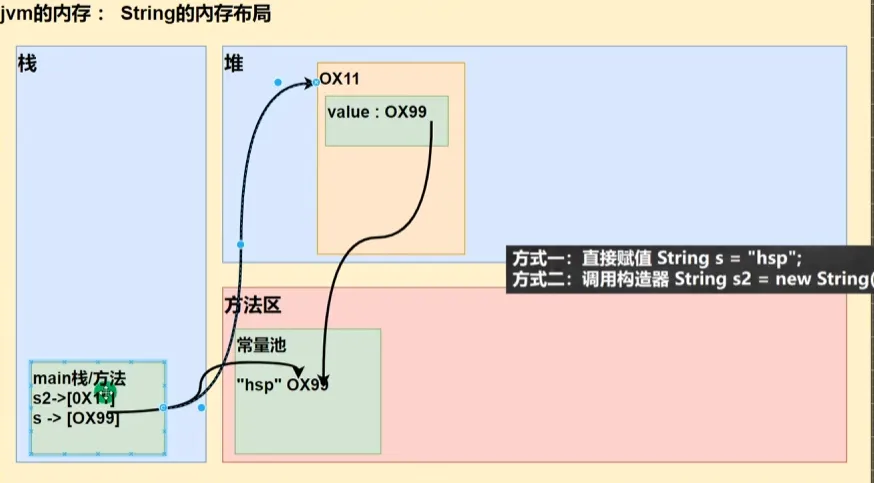
虽然指向的最终都是到常量池中的字符,但是二者指向的第一个地址不一样(一个在堆中,另一个在常量池中)
public class String1 {
    public static void main(String[] args) {
        String str1 = "abc"
        String str2 = new String("abc");
        System.out.println(str1 == str2);//false
    }
}
调用intern方法时,如果常量池中已经包含了对应的字符串,就返回池中的字符串地址,否则先添加String对象添加到池中,并返回池中的地址
一个测试题目
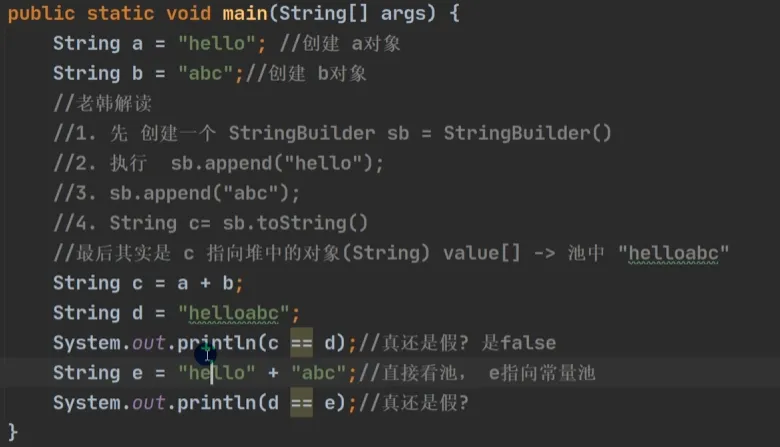
最后一个e指向常量池,true,优化为e = “helloabc”;
String的常用方法
equals
//判断是否相等
String str1 = new String("abc");
String str2 = new String("abccdff");
System.out.println(str1.equals(str2));//false
equalsIgnoreCase
//忽略大小写判断是否相等
String str1 = new String("abc");
String str2 = new String("ABC");
System.out.println(str1.equalsIgnoreCase(str2));//true
length
//字符个数,字符串长度
System.out.println(str1.length());//3indexOf
//获取第一个对应对应字符的索引,无则返回-1
注意可以传入字符串
System.out.println(str1.indexOf("bc"));//2
System.out.println(str2.lastIndexOf('B'));//2
lastIndexOf
//获取最后一个对应字符的索引,无则返回-1
同上类似
substring
//截取指定范围的字串
一个参数
public String substring(int beginIndex) {
    if (beginIndex < 0) {
        throw new StringIndexOutOfBoundsException(beginIndex);
    }
    int subLen = value.length - beginIndex;
    if (subLen < 0) {
        throw new StringIndexOutOfBoundsException(subLen);
    }
    return (beginIndex == 0) ? this : new String(value, beginIndex, subLen);
}
两个参数
public String substring(int beginIndex, int endIndex) {
    if (beginIndex < 0) {
        throw new StringIndexOutOfBoundsException(beginIndex);
    }
    if (endIndex > value.length) {
        throw new StringIndexOutOfBoundsException(endIndex);
    }
    int subLen = endIndex - beginIndex;
    if (subLen < 0) {
        throw new StringIndexOutOfBoundsException(subLen);
    }
    return ((beginIndex == 0) && (endIndex == value.length)) ? this
            : new String(value, beginIndex, subLen);
}
concat
//拼接字符串
System.out.println(str1.concat(str2));//abcABCreplace
//替换字符串
System.out.println(str1.replace("a", "b"));//bbctoUpperCase
//向上取大写
System.out.println(str1.toUpperCase());//ABCtoLowerCase
//取向下小写
System.out.println(str2.toLowerCase());//abcsplit
//以()为标准分割字符串内容
转移字符需要在前加 \
String str3 = new String("abc,ABe,CDE");
String[] stringArr = str3.split(",");
String str4 = stringArr[0];
System.out.println(str4);//abc
toCharArray
//转换为字符数组
char[] a = str1.toCharArray();
System.out.println(a[1]);//b
compareTo
//比较大小
String str1 = new String("abc");
String str2 = new String("ABC");
System.out.println(str1.compareTo(str2));//32
当区分不出大小且,长度不一样时有不同返回值,详见源码
public int compareTo(String anotherString) {
    int len1 = value.length;
    int len2 = anotherString.value.length;
    int lim = Math.min(len1, len2);
    char v1[] = value;
    char v2[] = anotherString.value;

    int k = 0;
    while (k < lim) {
        char c1 = v1[k];
        char c2 = v2[k];
        if (c1 != c2) {
            return c1 - c2;
        }
        k++;
    }
    return len1 - len2;
}
trim
//去前后空格
String str1 = new String("  ab c  ");
System.out.println(str1.trim());//ab c
format
//字符串格式化拼接
类似于C语言中printf
String str1 = new String("abc");
String str2 = new String("ABC");
String str3 = String.format("你好 %s 和 %s", str1, str2);
System.out.println(str3);//你好 abc 和 ABC
有点太多了,没必要全记,记不得在查,早晚会熟练使用的
StringBuffer
定义
是一种增强的String支持增删改,直接父类是AbstractStringBuilder,实现了可序列化的接口,是一个final类型,不可被继承
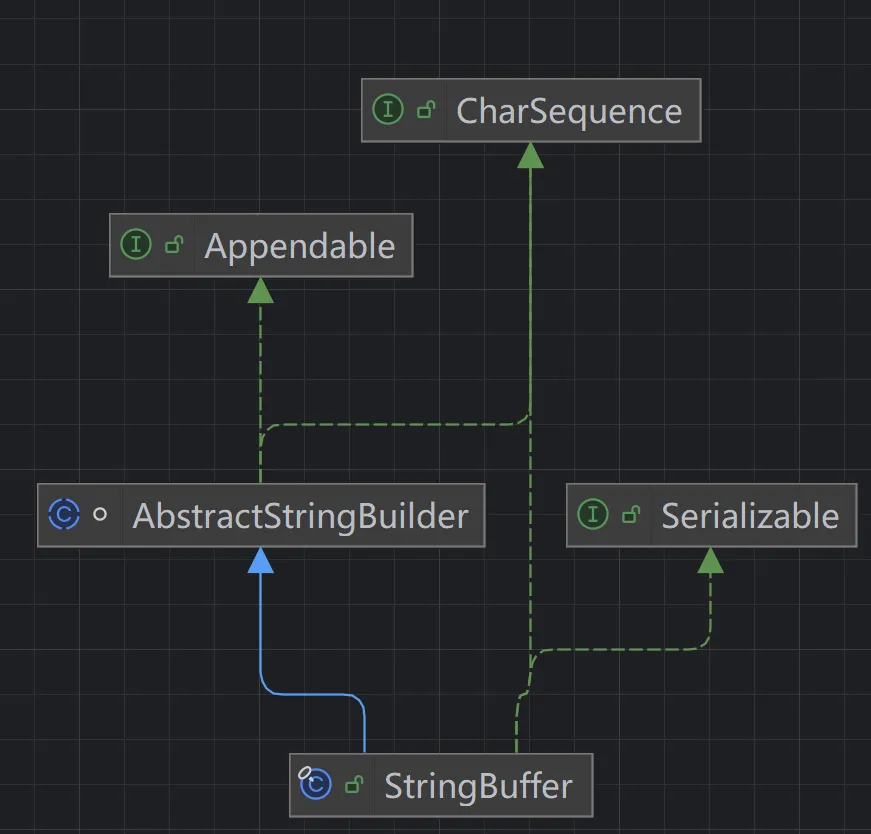
abstract class AbstractStringBuilder implements Appendable, CharSequence {
    char[] value;
其中有value char数组,存放在堆中
StringBuffer相较于String保存的字符串常量(值无法修改),StringBuffer不用在修改内容的时候更改地址(除非内存不足时重新扩容复制),所以效率上高于String
常用的构造器
默认的无参构造器(创建一个16字符的空间)
public class StringBuffer01 {
    public static void main(String[] args) {
        StringBuffer sb = new StringBuffer();
    }
}
传入int参数构造器,其中容量为32个字符
public class StringBuffer01 {
    public static void main(String[] args) {
        StringBuffer sb = new StringBuffer(32);
    }
}
传入String常量
public class StringBuffer01 {
    public static void main(String[] args) {
        StringBuffer sb = new StringBuffer("StringBuffer01");
    }
}
jdk源码,其中先new一个同样大小的数组,再通过append拼接+16的容量
public StringBuffer(String str) {
    super(str.length() + 16);
    append(str);
}AbstractStringBuilder(int capacity) {
value = new char[capacity];
}与String的转化
转为String
public class StringBuffer01 {
    public static void main(String[] args) {
        String str = "hello";
        StringBuffer sb1 = new StringBuffer(str);//对原先的str没有影响
        StringBuffer sb2 = new StringBuffer();
        sb2.append(str);//通过添加完成
    }
}
转为StringBuffer
public class StringBuffer01 {
    public static void main(String[] args) {
        StringBuffer sb = new StringBuffer("Hello");
        String str1 = sb.toString();
        String str2 = new String(sb);
    }
}
StringBuffer常用方法
append
在末尾添加字符
public class StringBuffer01 {
    public static void main(String[] args) {
        StringBuffer sb = new StringBuffer("Hello");
        sb.append(" World!!");
        System.out.println(sb);//Hello World!
    }
}
delete
删除 [1,3)的内容
public class StringBuffer01 {
    public static void main(String[] args) {
        StringBuffer sb = new StringBuffer("Hello");
        sb.delete(1, 3);
        System.out.println(sb.toString());//Hlo
    }
}
replace
替换,有三个参数,从 [1,3)的内容用参数 3 替换
public class StringBuffer01 {
    public static void main(String[] args) {
        StringBuffer sb = new StringBuffer("Hello");
        sb.replace(1, 3, "世界");
        System.out.println(sb.toString());//H世界lo
    }
}
indexOf
返回查找内容的索引(第一个)传入字符串
public class StringBuffer01 {
    public static void main(String[] args) {
        StringBuffer sb = new StringBuffer("Hello");
        System.out.println(sb.indexOf("l"));//2
    }
}
insert
在(第一个参数的位置)插入内容
public class StringBuffer01 {
    public static void main(String[] args) {
        StringBuffer sb = new StringBuffer("Hello");
        sb.insert(1, "插入");
        System.out.println(sb);//H插入ello
    }
}
length
返回长度
public class StringBuffer01 {
    public static void main(String[] args) {
        StringBuffer sb = new StringBuffer("Hello");
        System.out.println(sb.length());
    }
}
常见的例题
使用append传入null字符串
当为null的时候返回appendNull,而返回的值是一个null字符串
public class StringBuffer01 {
    public static void main(String[] args) {
        StringBuffer sb = new StringBuffer();
        String str = null;
        sb.append(str);
        System.out.println(sb.length());//4
        System.out.println(sb.toString());//null
    }
}
public AbstractStringBuilder append(String str) {
if (str == null)
return appendNull();
int len = str.length();
ensureCapacityInternal(count + len);
str.getChars(0, len, value, count);
count += len;
return this;
}private AbstractStringBuilder appendNull() {
int c = count;
ensureCapacityInternal(c + 4);
final char[] value = this.value;
value[c++] = 'n';
value[c++] = 'u';
value[c++] = 'l';
value[c++] = 'l';
count = c;
return this;
}第二种情况:使用构造器传入null
public class StringBuffer01 {
    public static void main(String[] args) {
        String str = null;
        StringBuffer sb = new StringBuffer(str);//抛出异常
    }
}
public StringBuffer(String str) {
super(str.length() + 16);//在源码这里因为null抛出异常
append(str);
}一个在价格中增添,的代码示例
public class StringBuffer01 {
    public static void main(String[] args) {
        Scanner sc = new Scanner(System.in);
        String price = sc.nextLine();//输入一个价格,在小数点前每隔3位用,隔离开
        StringBuffer sb = new StringBuffer(price);//123456.78
        int index = sb.indexOf(".");
        for(int i = index - 3; i > 0; i -= 3) {
            sb.insert(i, ",");
        }
        System.out.println(sb);
    }
}
StringBuilder
定义
public final class StringBuilder
    extends AbstractStringBuilder
    implements Serializable, CharSequence
{
是一个可变的字符序列,提供与StringBuffer兼容的API,但是不保证线程安全,被设计为StringBuffer的简易替换,用在字符串缓冲区被单个线程使用的时候
如果可能优先使用StringBuilder,因为它的效率大多都要比StringBuffer快
在StringBuilder上的主要操作时append和insert方法,可以重载这些方法用以接收任意类型的数据
StringBuffer继承了AbstractStringBuilder类,可串行化,可以保存在文件,是一个final类型,不可被继承
abstract class AbstractStringBuilder implements Appendable, CharSequence {

    char[] value;
字符存放在堆中
StringBuilder的方法没有作互斥的处理,没有synchronization关键字,只能在单线程中使用
String三者比较
1.StringBuilder和StringBuffer类似,均代表可变字符序列,方法一致
2.String是不可变字符序列,效率低,但是复用率高
3.StringBuffer是可变字符序列,效率较高(增删),线程安全
4.StringBuilder是可变字符序列,效率最高,线程不安全
课后练习
String str = new String(“hello”) + new String(“word”)过程中产生了几个对象
在Java中,当你使用+运算符进行字符串拼接时,编译器会自动进行优化,底层实际上是使用StringBuilder来实现的。这是出于性能和内存效率的考虑。
String str = new String("hello") + new String("word");编译器会将其转换为类似以下的字节码:
StringBuilder sb = new StringBuilder();
sb.append(new String("hello"));
sb.append(new String("word"));
String str = sb.toString();
1.反转字符串(将指定的部分反转)
public class Homework {
    public static void main(String[] args) {
        String str = new String("HelloWorld");
        str = reverse(str, 0, str.length() - 1);
        System.out.println(str.toString());
    }

    public static String reverse(String str, int start, int end) {
        char[] arr = str.toCharArray();
        for (int i = start, j = end; i < j; i++, j--) {
            char temp = arr[i];
            arr[i] = arr[j];
            arr[j] = temp;
        }
        return new String(arr);
    }
}
2.判断账号密码是否正确
public class Homework {
    public static void main(String[] args) {
        String input = new Scanner(System.in).nextLine();
        String[] strArray = input.split(",");
        if(strArray[0].length() == 2 || strArray[0]
                .length() == 3 || strArray[0].length() == 4) {
            System.out.println("用户名正确");
        }
        if(strArray[1].length() == 6 && isDigital(strArray[1])) {
            System.out.println("密码正确");
        }
    }
    public static boolean isDigital(String str) {
        char[] chars = str.toCharArray();
        for (int i = 0; i < chars.length; i++) {
            if (!Character.isDigit(chars[i])) {
                return false;
            }
        }
        return true;
    }
}
100,123456
用户名正确
密码正确